2026 Mar 26
【榮耀時刻】賀!臺灣里山永續創新聯盟多位會員夥伴 榮獲農業部首批「保育共生地」認證

【榮耀時刻】賀!臺灣里山永續創新聯盟多位會員夥伴 榮獲農業部首批「保育共生地」認證

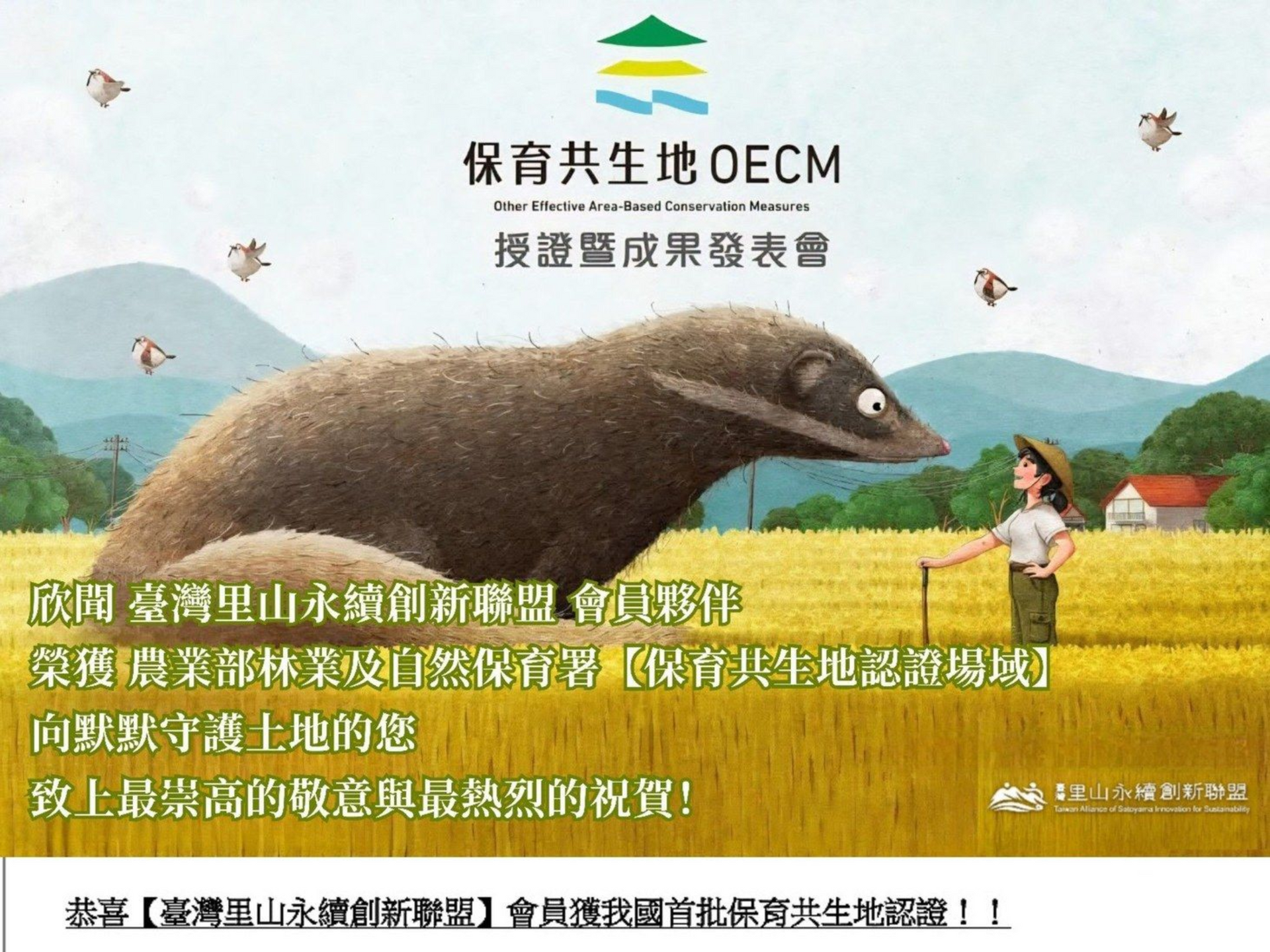
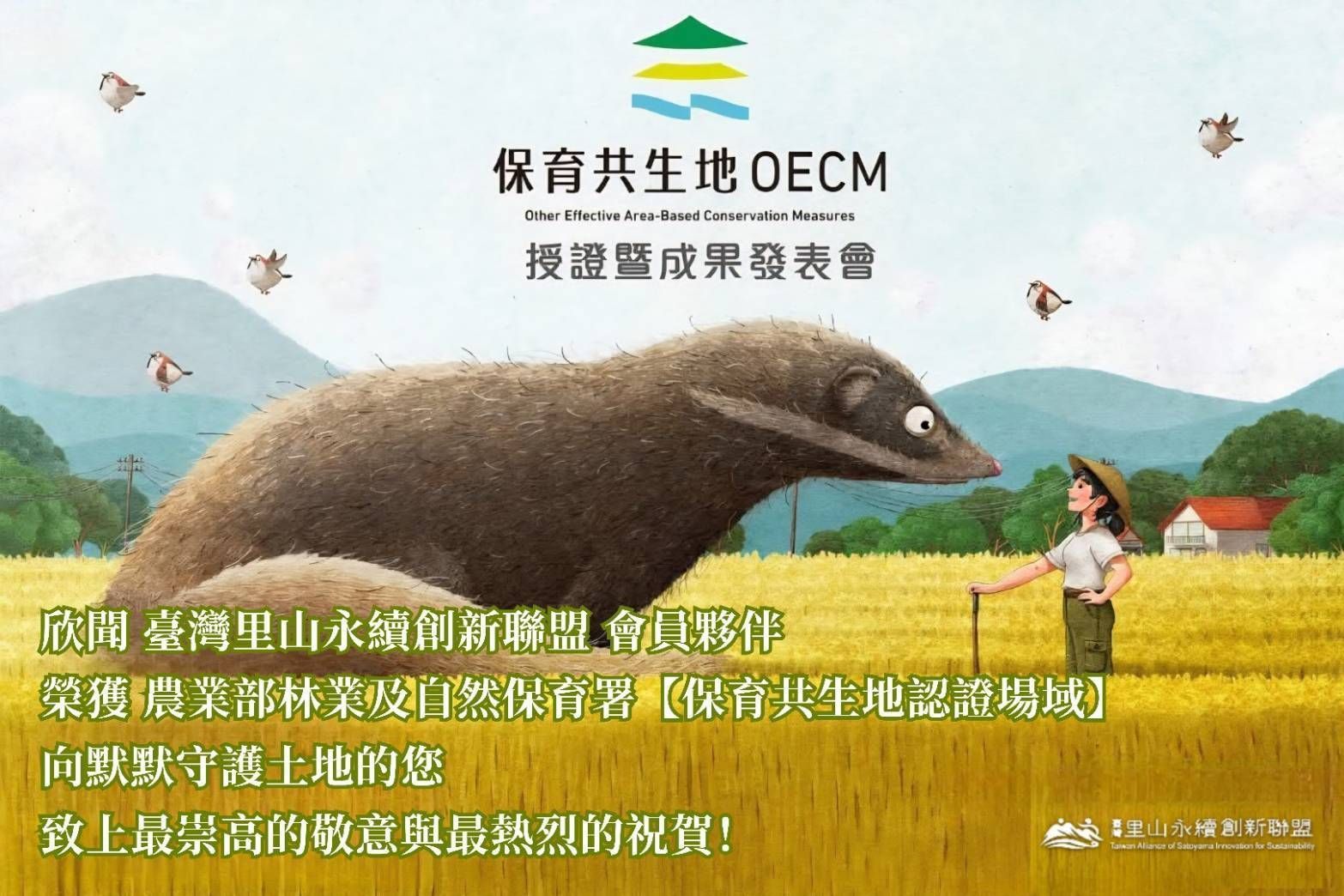
農業部林業及自然保育署於昨日(3/25)舉行「114年度保育共生地授證暨成果發表會」,本聯盟(TASIS)多位會員夥伴憑藉長期在土地經營與生物多樣性維護上的傑出表現,正式獲得國家首批「保育共生地(OECM)」認證!
這份榮耀屬於每一位在田間、在林下、在社區中默默守護土地的夥伴。聯盟將持續秉持里山精神,串聯更多志同道合的夥伴,為台灣的生物多樣性保育與永續創新貢獻心力。再次向所有獲證夥伴致上最誠摯的祝賀!
聯盟成員名稱 (職稱/會員編號)
- 阿里磅生態休閒農場 (G001/P034)
- 財團法人慈心有機農業發展基金會 (G004)
- 高雄市六龜區十八羅漢山自然人文協會 (G006)
- 苗栗縣明德社區養蜂復育中心協會 (G009)
- 林業及自然保育署 臺東分署 (G018)
- 林業及自然保育署 屏東分署 (G035)
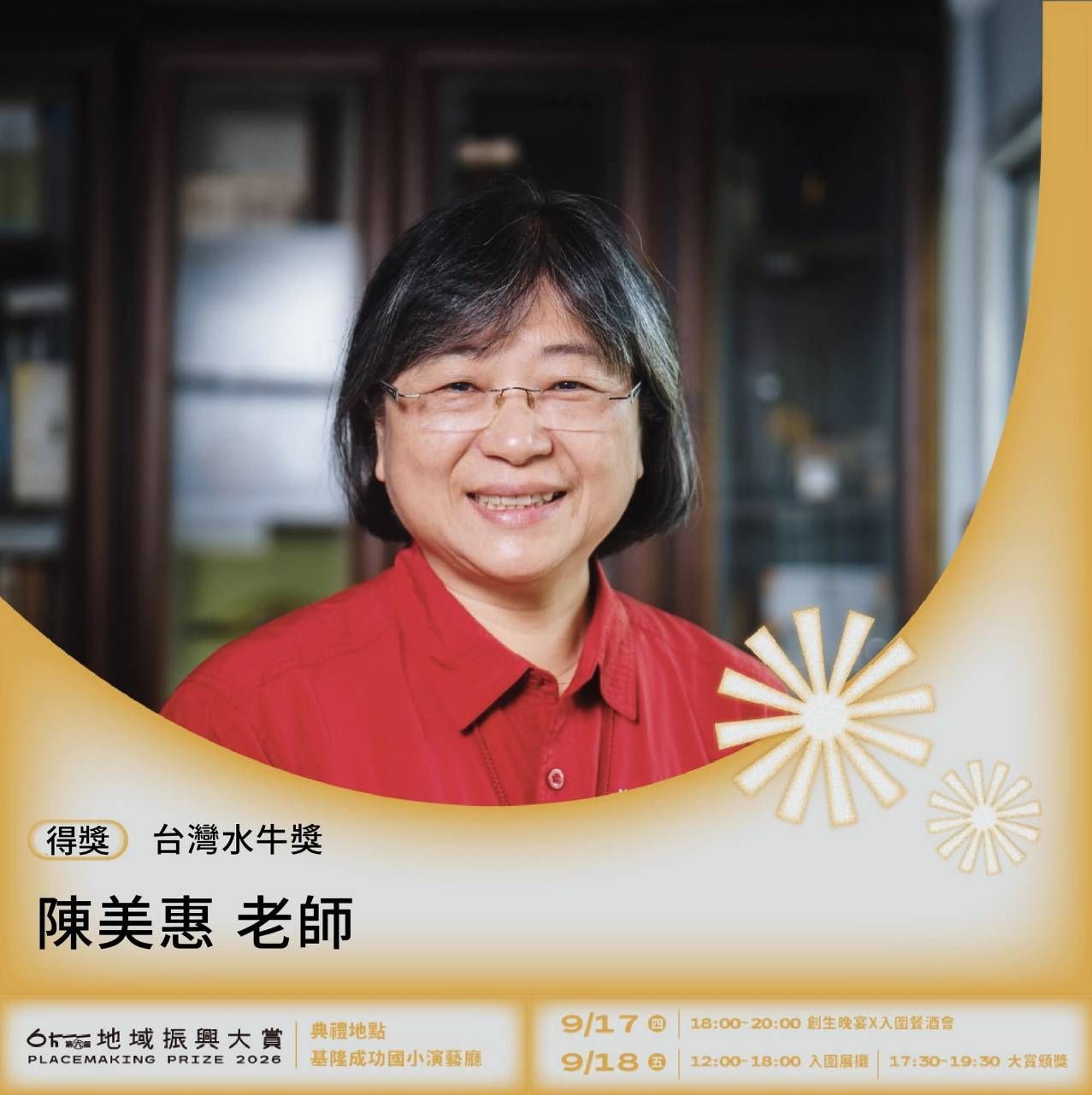
- 陳美惠 (理事長 / P032)
- 汪文豪 (理事 / P017)
- 謝文達 (常務理事 / G009)
- 陳秋坤 (常務理事 / P031)
- 許秋容 (個人會員 P071)
- 張美惠 (個人會員 P083)
- 林紋翠 (個人會員 P094)
- 吳憶萍 (團體會員 G022)
對應之認證場域
- 阿里磅生態休閒農場
- 慈心大自然莊園
- 玉山瓦拉米
- 南方金鑽-十八羅漢山服務區
- 明德保育共生地
- 綠島(第2530號保安林)
- 池上興富林業生態文園區
- 第2514號保安林及都歷部落友善耕作園區
- 高屏溪流域草鴞復育棲地
- 國立屏東科技大學達仁林場
- 國立政治大學
- 明德保育共生地
- 正美茶棧
- 種瓜自然森
- 高士佛植物保育原生地
- 貢寮和禾水梯田
- 多多鳥濕地學校 (候選)

2026 Mar 7
Written by Mei-Hui Chen. Image credit: Visitors playing with leaf boats in the Laonong stream – a traditional childhood game of the Luigui locals. Photo courtesy of the author. What is an Ecotourism Destination Marketing Organisation (DMO)? Satoyama-satoumi landscapes and seascapes are ideal destinations for community-based ecotourism. For the past 20 years, Taiwan has been actively promoting ecotourism in rural areas. It aims to support biodiversity conservation, preserve cultural heritage, and promote sustainable local livelihoods. Over time, however, it has become clear that the diversity of tours and products, as well as the marketing capacity of a single community, is rather limited. This has affected the overall progress of community-based ecotourism development in the country. To address this challenge, the ecotourism trend has been gradually shifting from individual communities to the promotion of regional partnership networks in recent years. This innovative shift raises an important question: how can stakeholders —including communities, government agencies, and tourism professionals—effectively coordinate to link ecotourism destinations, facilitate exchanges across itineraries, products, services, talents, space, and expertise, and jointly build a community-based ecotourism industry? This is when ecotourism DMOs (Destination Marketing Organisations) can be a good solution. DMO s serve as a mechanism that engages government agencies, local stakeholders, and tourism professionals to collaborate on achieving a shared vision for tourism development. It integrates natural, human, administrative, financial, and other types of available resources to support a long-term goal of sustainable local development. DMOs need to coordinate across multiple stakeholders and have the ability to interpret data and manage knowledge to play a strategic role in the fiercely competitive tourism market. In general, DMOs are ‘integrated leaders’ of tourism destinations and need to work at multiple levels, including strategy, governance, branding, marketing, and sustainability, to achieve overall development of regional ecotourism. Since the introduction of the Community Forestry project in 2002, our team from the National Pingtung University of Science and Technology has been supporting satoyama and satoumi communities in southern Taiwan and nationwide in the development of their community-based ecotourism DMOs. The story of the Shih-ba-luo-han-shan Forest Reserve and its community efforts is one of the brightest examples of Taiwan’s regional DMOs to date. Community Participation in the Management of the Shih–ba–luo–han-shan Forest Reserve The Shih-ba-luo-han-shan mountain range is located in Luigui District, Kaohsiung City, southern Taiwan. It consists of several kilometres of independent peaks with unique shapes, forming many U-shaped valleys, canyons, peaks, meanders, and dry valleys. The Forestry and Nature Conservation Agency (FANCA), Ministry of Agriculture, established the Shih-ba-luo-han-shan Forest Reserve in 1992 to protect this unique geo-ecological landscape. This beautiful mountain range had always had an important collective memory in the eyes of the locals. However, after the establishment of the nature reserve, the local people lost access to it, which led to opposition and conflict with the management authority.

2026 Mar 7
Written by Mei-Hui Chen. Image credit: Visitors playing with leaf boats in the Laonong stream – a traditional childhood game of the Luigui locals. Photo courtesy of the author. What is an Ecotourism Destination Marketing Organisation (DMO)? Satoyama-satoumi landscapes and seascapes are ideal destinations for community-based ecotourism. For the past 20 years, Taiwan has been actively promoting ecotourism in rural areas. It aims to support biodiversity conservation, preserve cultural heritage, and promote sustainable local livelihoods. Over time, however, it has become clear that the diversity of tours and products, as well as the marketing capacity of a single community, is rather limited. This has affected the overall progress of community-based ecotourism development in the country. To address this challenge, the ecotourism trend has been gradually shifting from individual communities to the promotion of regional partnership networks in recent years. This innovative shift raises an important question: how can stakeholders —including communities, government agencies, and tourism professionals—effectively coordinate to link ecotourism destinations, facilitate exchanges across itineraries, products, services, talents, space, and expertise, and jointly build a community-based ecotourism industry? This is when ecotourism DMOs (Destination Marketing Organisations) can be a good solution. DMO s serve as a mechanism that engages government agencies, local stakeholders, and tourism professionals to collaborate on achieving a shared vision for tourism development. It integrates natural, human, administrative, financial, and other types of available resources to support a long-term goal of sustainable local development. DMOs need to coordinate across multiple stakeholders and have the ability to interpret data and manage knowledge to play a strategic role in the fiercely competitive tourism market. In general, DMOs are ‘integrated leaders’ of tourism destinations and need to work at multiple levels, including strategy, governance, branding, marketing, and sustainability, to achieve overall development of regional ecotourism. Since the introduction of the Community Forestry project in 2002, our team from the National Pingtung University of Science and Technology has been supporting satoyama and satoumi communities in southern Taiwan and nationwide in the development of their community-based ecotourism DMOs. The story of the Shih-ba-luo-han-shan Forest Reserve and its community efforts is one of the brightest examples of Taiwan’s regional DMOs to date. Community Participation in the Management of the Shih–ba–luo–han-shan Forest Reserve The Shih-ba-luo-han-shan mountain range is located in Luigui District, Kaohsiung City, southern Taiwan. It consists of several kilometres of independent peaks with unique shapes, forming many U-shaped valleys, canyons, peaks, meanders, and dry valleys. The Forestry and Nature Conservation Agency (FANCA), Ministry of Agriculture, established the Shih-ba-luo-han-shan Forest Reserve in 1992 to protect this unique geo-ecological landscape. This beautiful mountain range had always had an important collective memory in the eyes of the locals. However, after the establishment of the nature reserve, the local people lost access to it, which led to opposition and conflict with the management authority.
Share this article